
Introduction
When planning an HVAC system for a commercial or industrial space, two of the most commonly considered options are VRF (Variable Refrigerant Flow) systems and ductable air conditioning systems. Both offer effective cooling solutions, but they differ significantly in design, flexibility, and application. Understanding these differences helps in selecting the right system based on your project requirements.
What is a VRF System?
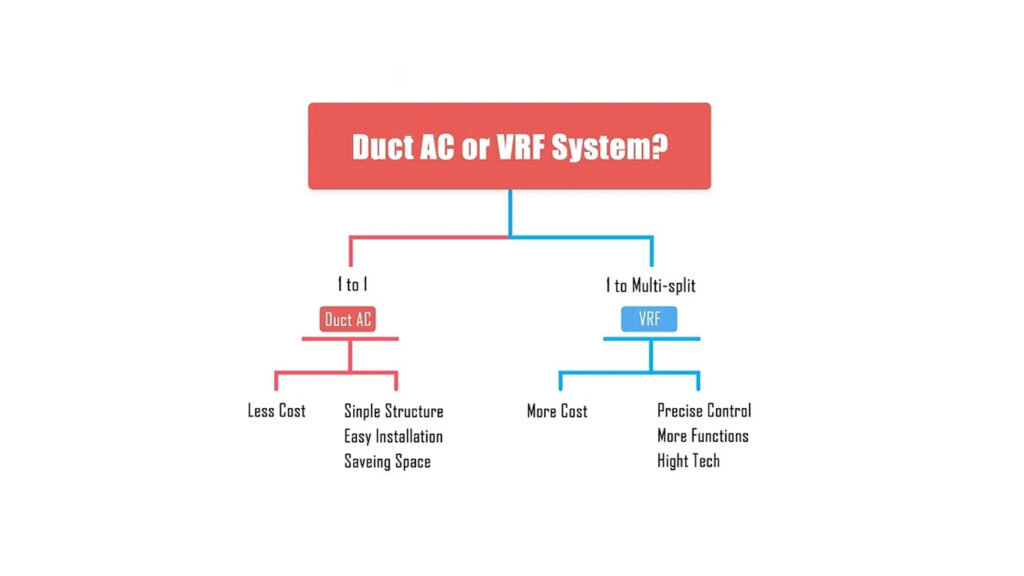
A VRF system uses a single outdoor unit connected to multiple indoor units, allowing individual temperature control in different zones. This makes it highly flexible and suitable for large buildings with varying cooling needs. VRF systems are widely used in offices, hotels, hospitals, and commercial complexes.
What is a Ductable AC System?
Ductable systems are centralized air conditioning solutions that distribute cooled air through a network of ducts. These systems are usually concealed within ceilings, maintaining a clean and aesthetic interior. They are ideal for spaces where uniform cooling is required across a large area.
Key Differences
- Flexibility: VRF systems offer zone-wise control, while ductable systems provide centralized cooling.
- Installation: VRF systems require less ductwork, whereas ductable systems depend on proper duct design.
- Aesthetics: Ductable systems are fully concealed; VRF systems may have visible indoor units.
- Energy Efficiency : VRF systems are generally more energy-efficient due to variable operation.
Which One Should You Choose?
- Choose VRF systems for large buildings with multiple rooms and varying usage.
- Choose ductable systems for open spaces requiring uniform cooling and clean interiors.
Conclusion
Both systems are effective, but the right choice depends on your space, budget, and operational requirements. Consulting HVAC experts ensures the best solution for long-term performance.